
1 Park Row, New York, NY.
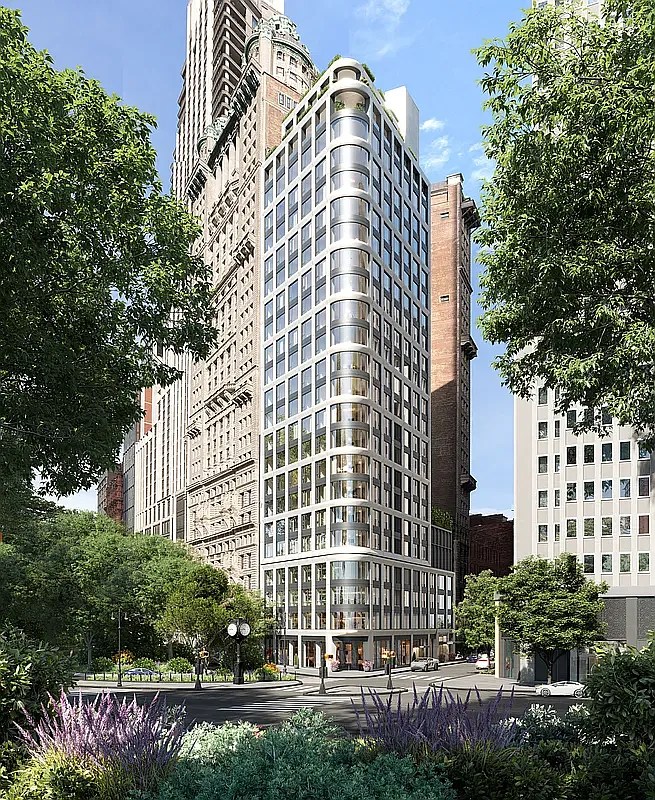
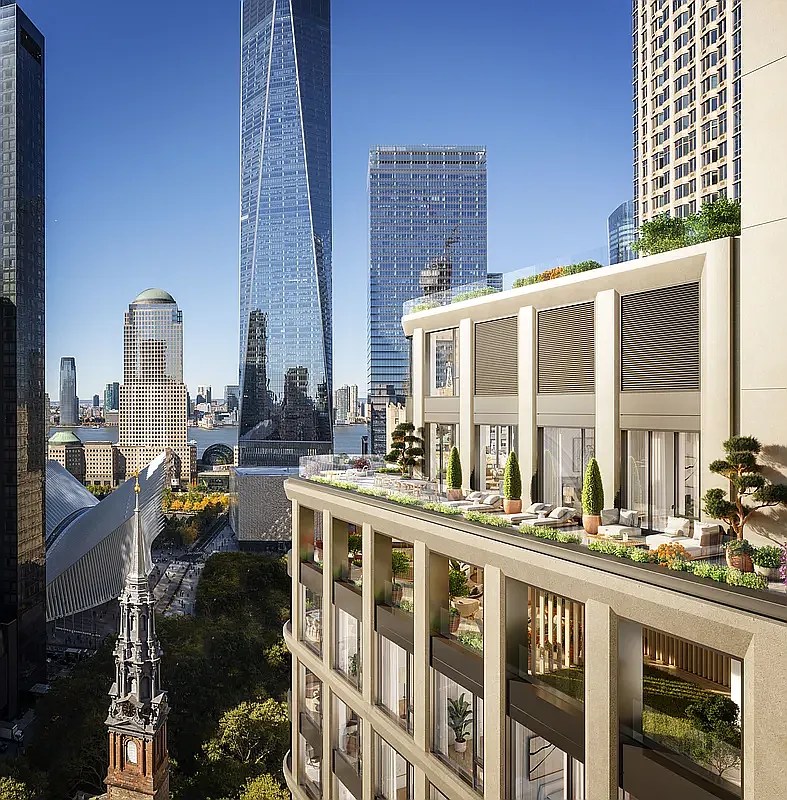
This building reimagined art deco-inspired building is situated on a triangular plan at the corner of the elegant Park Row and Ann Street, with its futuristic shimmering glass façade, sleek lines, and a distinctive curved corner that responds to its triangular site. 1 Park Row is just steps away from the iconic Brooklyn Bridge, City Hall Park, The Oculus, and World Trade Center (WTC), Seaport, and landmarks such as Trinity Church and The Woolworth Building — offering a perfect combination of breathtaking city views, greenery, and stunning Hudson River sunsets.
This twenty three story mixed use residential tower designed by Fogarty Finger Architects and developed by Circle F Capital, with interior architecture by Paris Forino. The façade of 1 Park Row features a modern grid of floor-to-ceiling windows framed by smooth white precast and metal paneling, contrasted by dark horizontal spandrel banding and a striking rounded glass corner. The tower wraps its sculpted beige exterior around the building’s upper floors, with alternating bands of dark gray paneling breaking up the two-story window grid and giving the tower a rhythmic, striped presence against the downtown skyline.
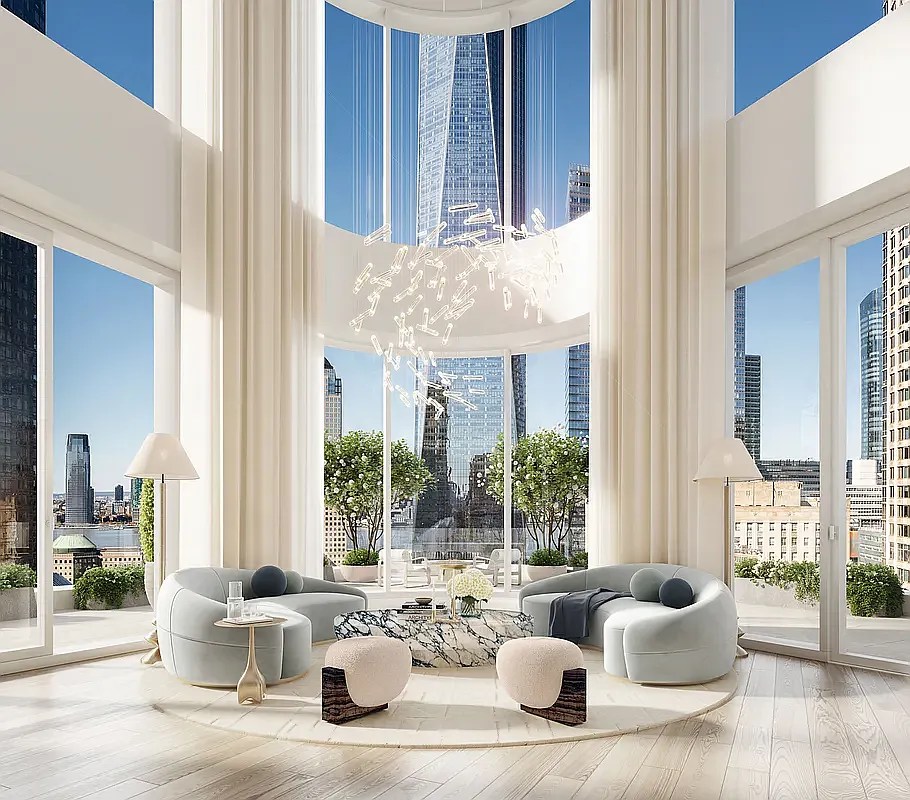
Beyond the sculpted primary façade, 1 Park Row’s construction reflects careful attention to its tighter, less visible elevations as well. Interior partition walls throughout the tower were built using CMU block, providing durable, fire-resistant separation between units and mechanical spaces, while the basement level required a slab on grade infill pour to level and stabilize the foundation across the site. On the building’s rear elevation, facing a neighboring courtyard, an EIFS (Exterior Insulation and Finish System) façade was constructed around structural steel beams encroaching from the adjacent 15 Park Row building, a solution that required close coordination between the two properties. Rather than serving a purely aesthetic role, this EIFS assembly, applied across approximately 19 stories, was selected for its insulating properties, helping to reduce thermal transfer and improve the tower’s overall energy performance even on a façade rarely seen from the street.

