
South Hampton Residence: A Case Study in Built Calm.
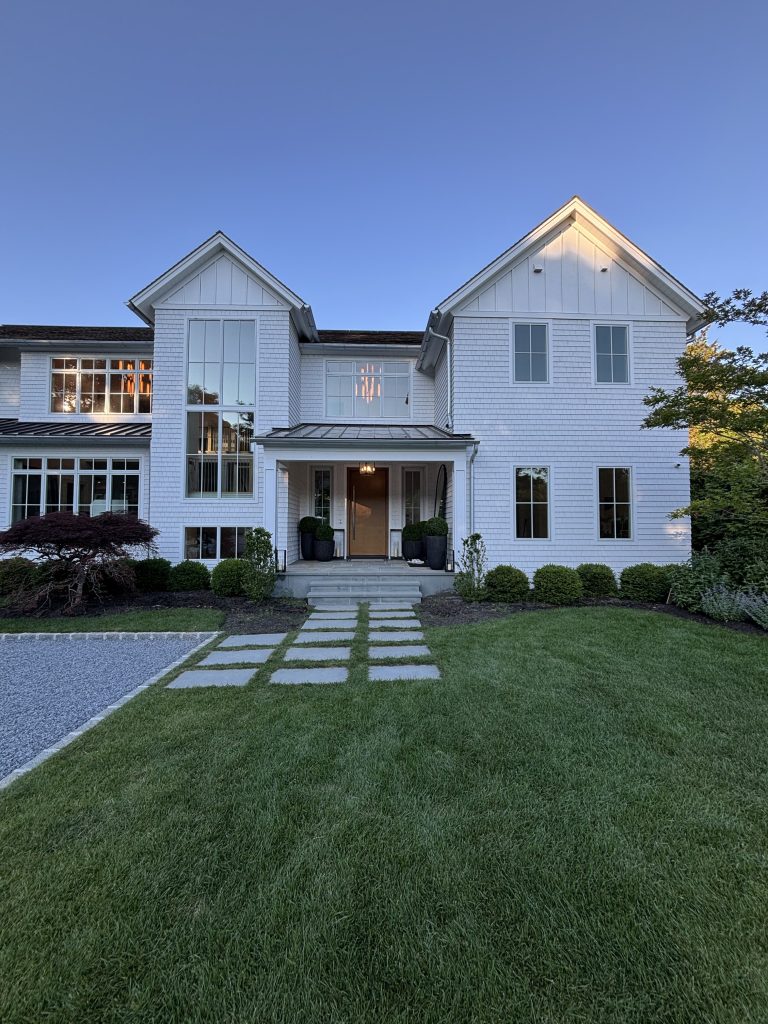
A shingle style home reworked around a simple premise: the spaces we live in shape how we think, sleep, and recover, whether we notice it or not. Working within the vocabulary of the traditional Hamptons house, gabled rooflines, cedar shingle, black-framed windows, the design turns inward on questions of material, light, and sightline, applying principles from neuroaesthetics and biophilic design to a form that, from the street, reads as familiar.
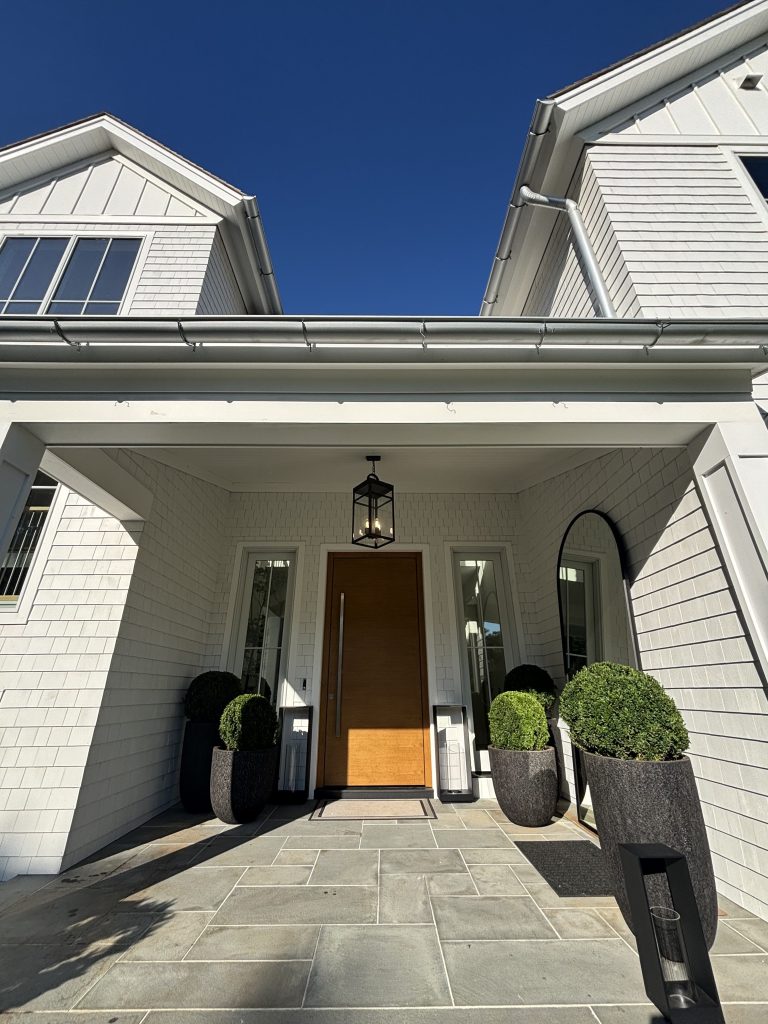
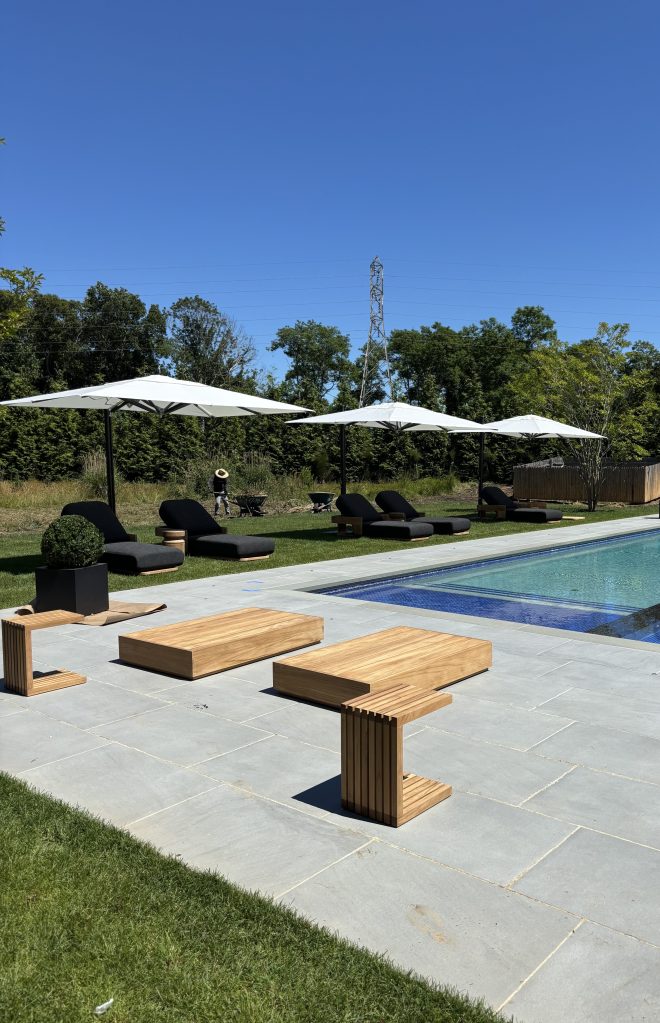
The stair hall runs the full height of the house and pulls daylight down through two floors, so that even the lower level reads as sunlit rather than excavated. A run of large format stone paving carries that same restraint outdoors, where teak benches and low tables sit close to the ground, left in raw, unfinished grain rather than sealed or stained. The choice is deliberate. Exposed wood is one of the more consistently studied biophilic materials, tied in the research to measurably lower reported stress, and it ages into the landscape rather than sitting apart from it.
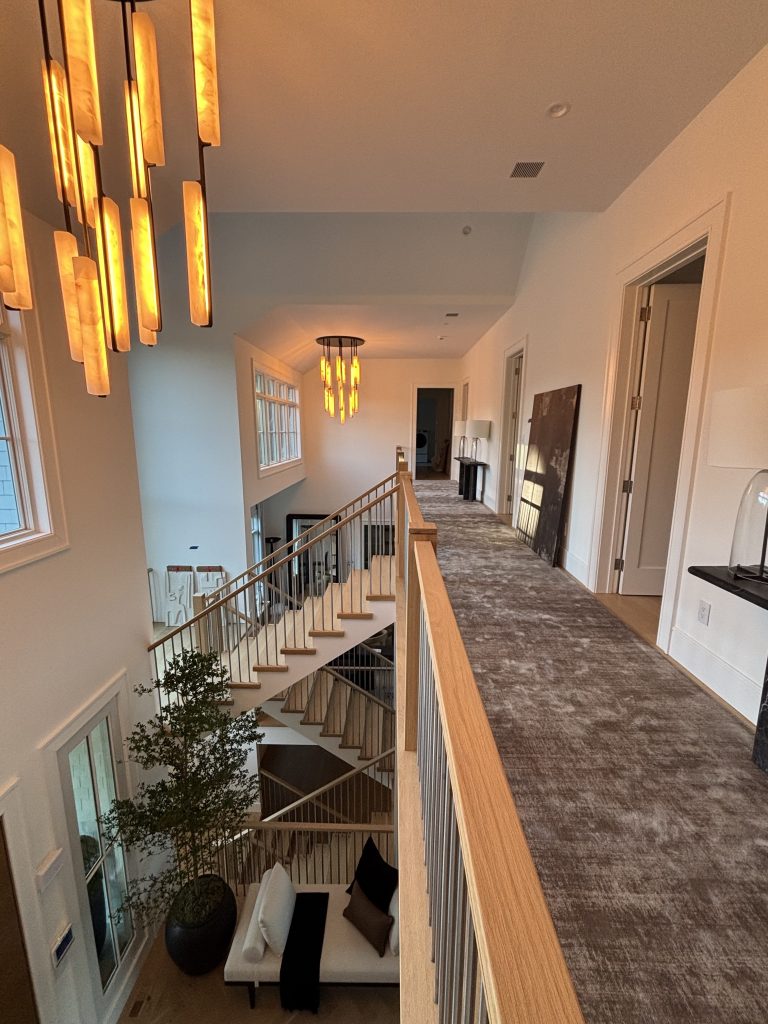
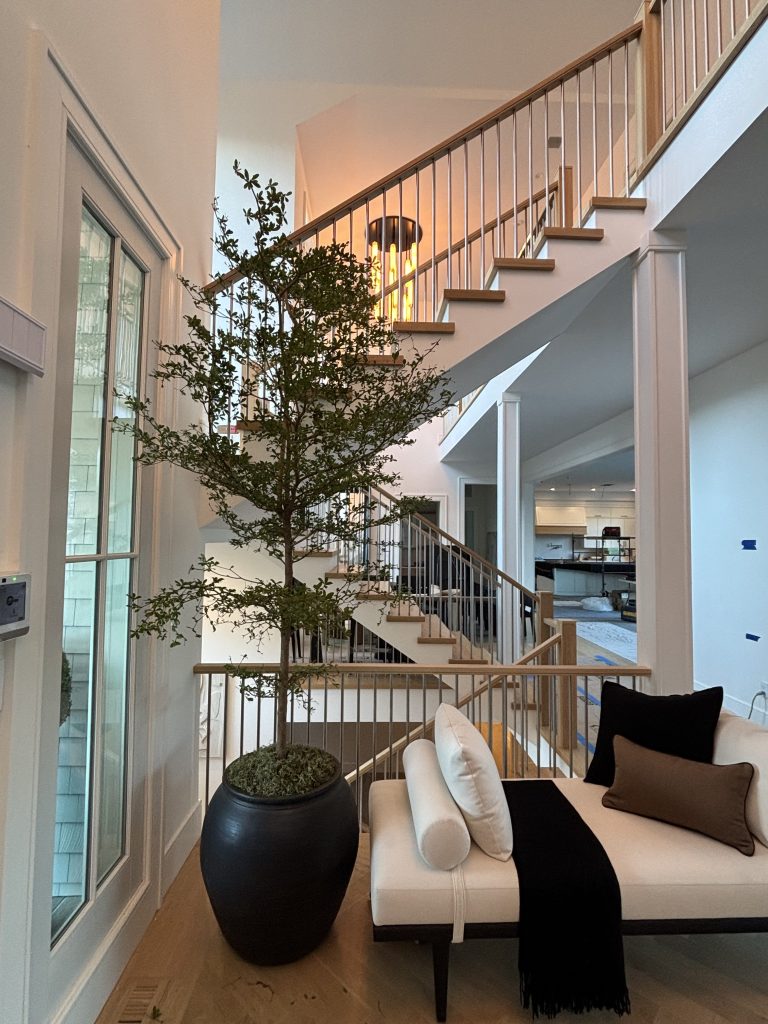
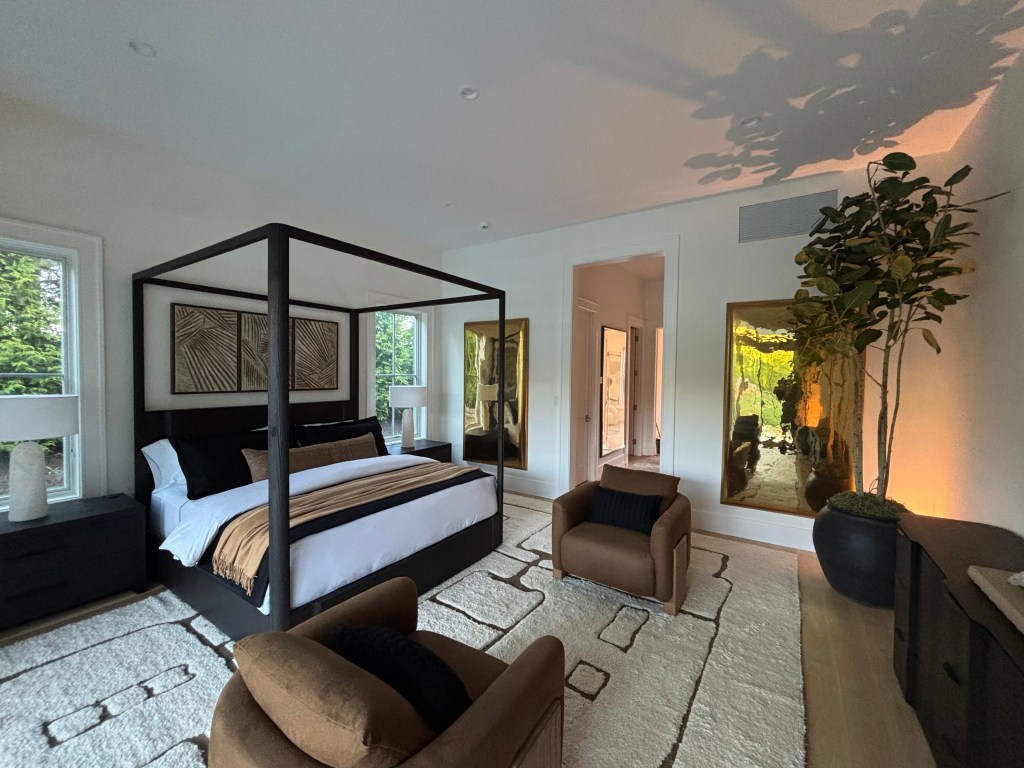
Inside, the palette holds to charcoal, bone, and walnut throughout, a restraint that is functional as much as aesthetic: saturated color and visual clutter both raise cognitive load, and a quiet palette lowers it before a room has been consciously registered at all. Furniture is kept low and horizontal, echoing the sightlines out toward the pool and the treeline beyond it rather than competing with them.
Plantings do structural work rather than decorative work. Olive and citrus trees stand at the scale of the room in the primary suite and stair hall, so that greenery sits inside the everyday sightline rather than requiring one to seek it out. At the entry, boxwood topiaries are set in matched pairs, a symmetry the eye reads as ordered and the mind, in turn, reads as safe.
“We didn’t want a house that photographs well and nothing more. We wanted one that does something to you physiologically before you’ve thought about why.” — Raul, Principal, Altuve
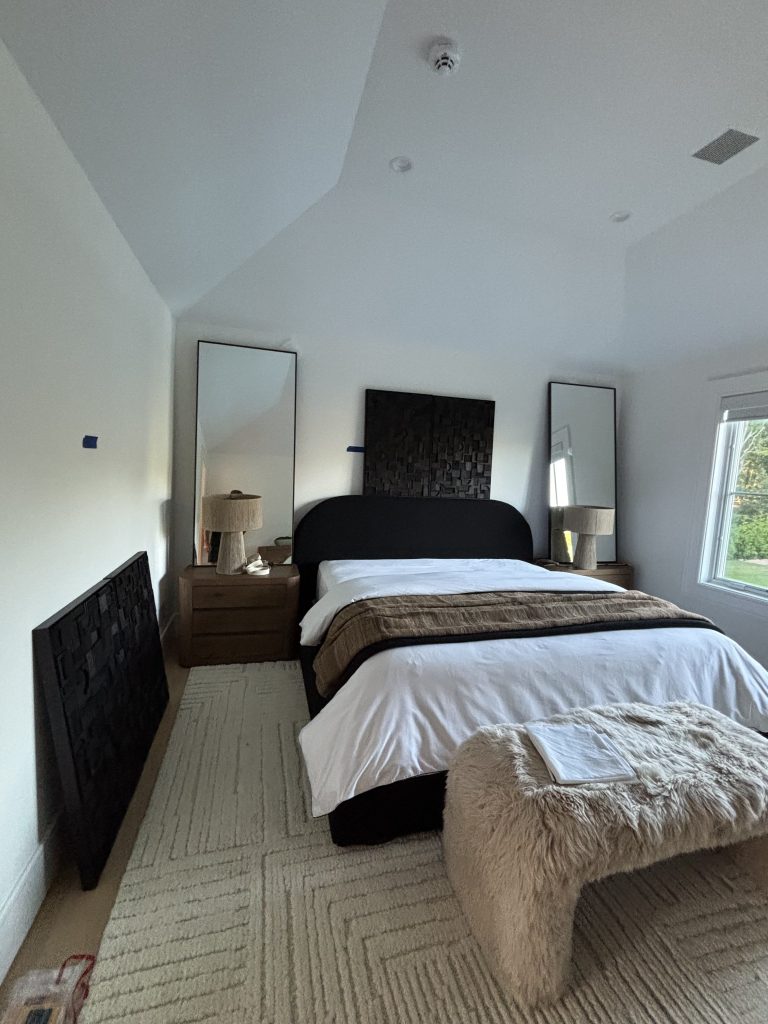
Nothing here is ornamental for its own sake. Every material, from the unlacquered brass to the woven wool underfoot, was chosen for what it does for the people living with it across seasons, not for how it reads in the first six months. That is the standard the project was held to throughout.

